
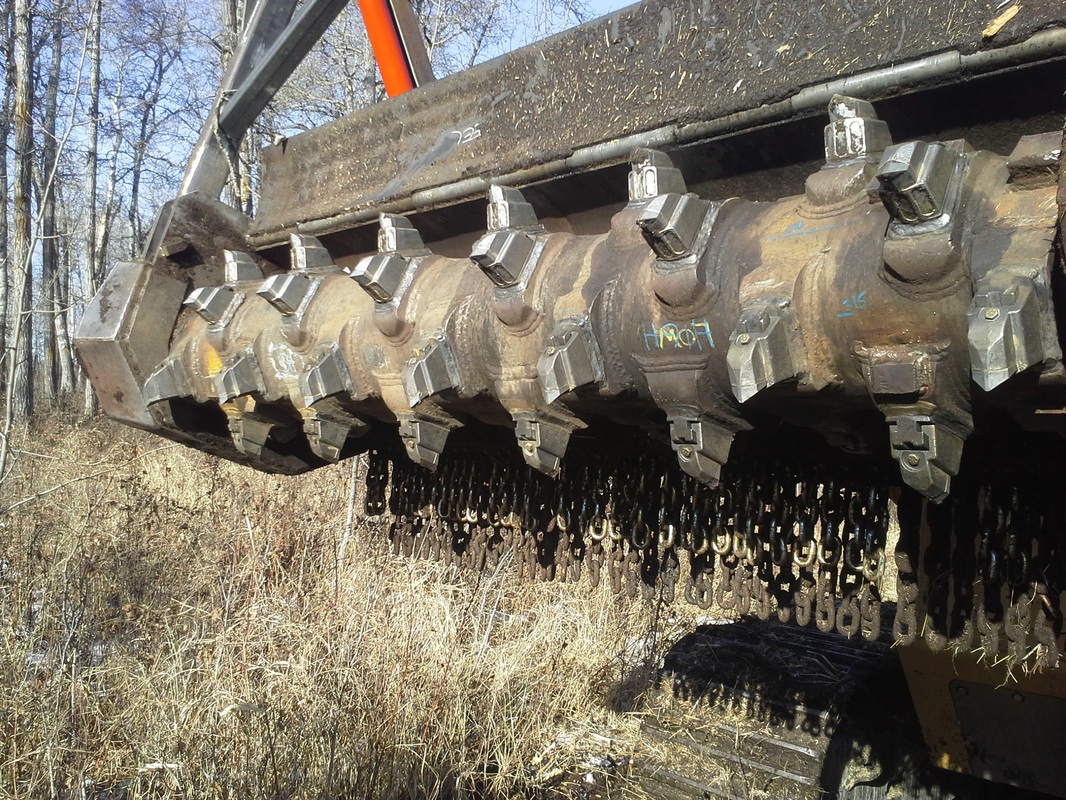
Can You Run Mixed Mulcher Teeth on the Same Rotor?
It’s a common question in forestry and land clearing:
Can you run mixed mulcher teeth on the same rotor?
The short answer is yes — but only if it’s done correctly.
Mixing tooth types without planning can cause vibration, uneven wear, and premature component failure. However, in some situations, a properly balanced mixed setup can work effectively.
Here’s what you need to know.
Why Operators Consider Mixing Teeth
There are usually three reasons operators think about mixing tooth types:
- To reduce cost
- To increase durability in high-wear areas
- To experiment with cutting performance
For example, some may consider running carbide teeth in leading positions and steel or beaver teeth elsewhere.
While this can work, it must be approached carefully.
The Biggest Risk: Rotor Imbalance
Mulcher rotors operate at high speeds. Even small weight inconsistencies can create:
- Excess vibration
- Increased bearing wear
- Stress on the rotor shaft
- Reduced cutting efficiency
Randomly mixing tooth types — especially those with different weights — can throw the rotor out of balance.
Balance must always be maintained across the rotor.
When Mixing Teeth Can Work
Strategic mixing may be appropriate when:
- Teeth are installed symmetrically
- Weight is evenly distributed
- The rotor pattern is maintained correctly
Examples include:
- Alternating tooth types evenly across the rotor
- Installing more durable teeth in known high-impact zones
- Replacing teeth in complete opposing pairs
The key principle is symmetry.
If one tooth is changed, the matching tooth on the opposite side of the rotor should also be changed.
When You Should Avoid Mixing
Mixing is not recommended when:
- Teeth vary significantly in weight
- The rotor is already experiencing vibration
- Teeth are heavily worn in some positions and new in others
- The application involves heavy forestry or abrasive ground
In high-demand commercial applications, a consistent carbide setup is typically the safest and most reliable option.
Best Practice If You Do Mix
If mixing is necessary:
- Maintain perfect symmetry
- Replace teeth in opposing pairs
- Monitor vibration after installation
- Inspect frequently during operation
If vibration increases or cutting becomes inconsistent, the setup should be reviewed immediately.
Need Advice on Your Mulcher Setup?
At Xtreme Wear Parts, we help operators select cutting configurations that maximise durability and performance. If you’re unsure about your current setup, our team can help.
Contact us for expert guidance.