
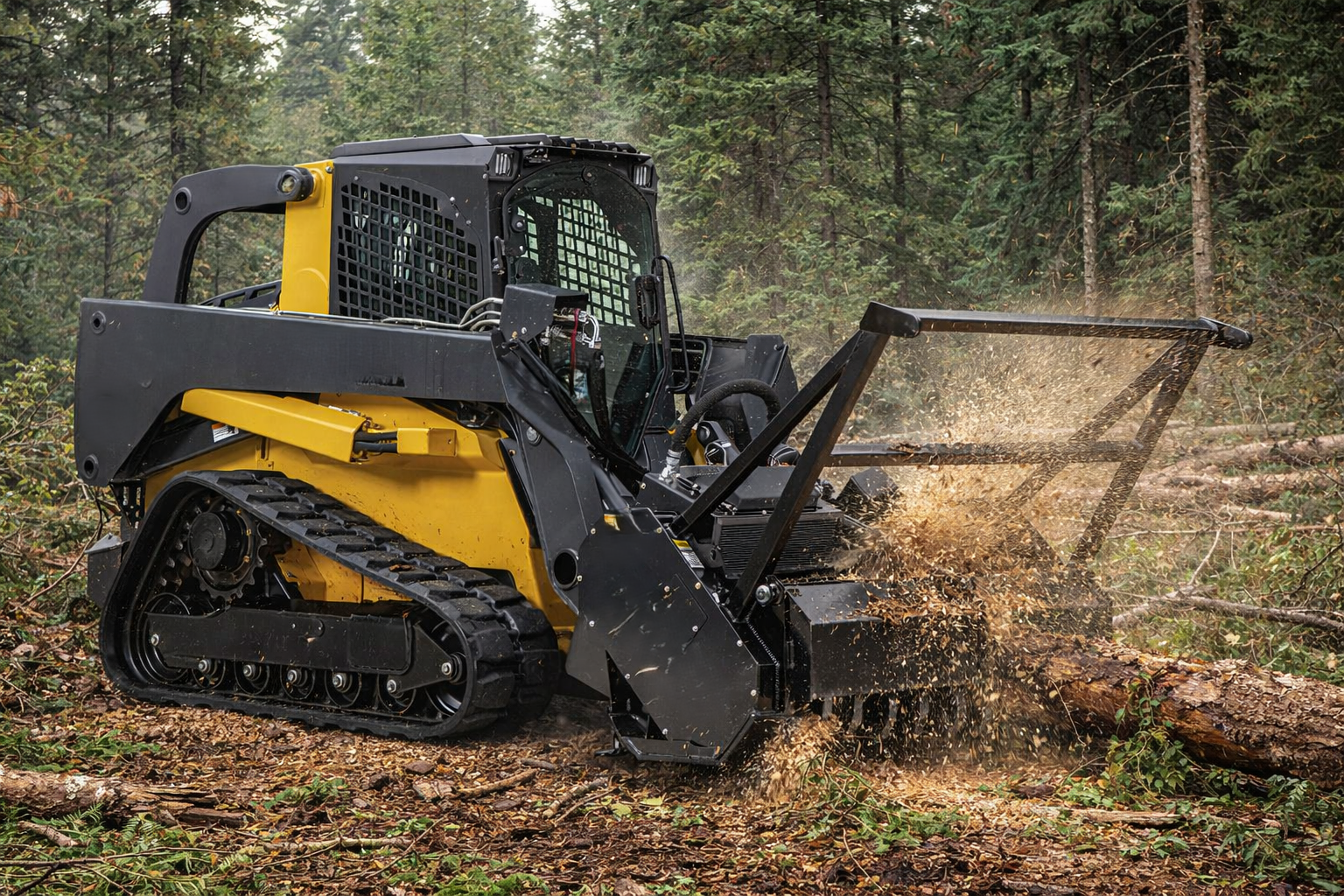
When it comes to forestry mulching and land clearing, the tools you use on your rotor have a direct impact on productivity, wear life, and operating cost. Choosing the wrong setup can lead to excessive downtime, premature wear, and unnecessary expense — even if the tools physically fit your machine.
The three most common mulcher teeth types are:
· Planer knives
· Beaver teeth
· Carbide mulcher teeth
Each has its place. The key is matching the cutting tool to your machine, terrain, and workload.
Step 1: Start With Your Application
Before selecting cutting tools, consider what you’re actually mulching.
Light Vegetation and Brush
If you’re primarily cutting grass, light brush, or small saplings in soft soil, planer knives or steel-based teeth may be sufficient.
These tools:
· Slice cleanly at high rotor speeds
· Perform well in low-impact environments
· Offer lower upfront cost
However, they are not designed for prolonged ground contact or heavy impact.
Medium Brush and Mixed Growth
For thicker vegetation and occasional ground engagement, beaver teeth offer a step up in durability compared to planer knives.
Beaver teeth:
· Have a more aggressive profile
· Provide stronger bite in woody material
· Handle moderate workloads effectively
That said, they still rely on hardened steel and will wear faster in abrasive soil or rocky terrain.
Forestry, Roots, and Abrasive Ground
If you’re working in hardwood, stumps, rocky soil, or unpredictable terrain, carbide mulcher teeth are typically the more durable option.
Carbide teeth:
· Use tungsten carbide inserts for extreme wear resistance
· Handle repeated impact better than steel-only tools
· Maintain cutting performance for longer periods
In demanding commercial applications, durability becomes critical.
Step 2: Match the Cutting Tool to Your Machine
Machine size and power matter.
Higher horsepower machines generate more torque and impact force. Lightweight steel tools may wear prematurely on larger mulchers.
Consider:
· Operating weight
· Hydraulic flow and pressure
· Rotor speed
· Fixed vs swinging rotor design
Larger machines and high-hour operations generally benefit from more robust cutting tools.
Important: Not All Machines Can Run Every Tooth Type
One critical factor often overlooked is compatibility.
Not all mulchers are designed to accept different tooth styles. The ability to run planer knives, beaver teeth, or carbide teeth depends on:
· Rotor design
· Holder configuration
· Mounting system (bolt pattern and pocket type)
· Manufacturer specifications
Some machines are built specifically for planer knife systems and cannot simply be converted to carbide teeth without changing holders or rotor components. Similarly, certain carbide tooth systems require dedicated pockets or mounting hardware.
Before switching tooth types, always confirm that:
· Your rotor supports the alternative design
· The holders are compatible
· The mounting hardware matches correctly
Attempting to fit incompatible teeth can lead to poor seating, excessive vibration, or premature failure.
When in doubt, consult the manufacturer or an experienced wear parts supplier.
Step 3: Understand Your Ground Conditions
Ground conditions often determine which cutting tool makes sense.
Soft, Sandy, or Loamy Soil
Steel-based tools can perform well when impact and abrasion are minimal.
Mixed or Unknown Terrain
When soil composition varies and hidden rock is possible, durability becomes more important.
Rocky or Abrasive Conditions
Carbide teeth are typically recommended due to their resistance to chipping and abrasive wear.
If your work changes from site to site, it’s often safer to choose durability over minimum upfront cost.
Step 4: Think Beyond Purchase Price
Upfront price is only part of the equation.
Cheaper tools may require:
· More frequent change-outs
· Increased labour time
· Additional downtime
For commercial operators, cost per hour is the more important metric. Longer-lasting cutting tools often reduce total operating expense over time.
Step 5: Consider Downtime and Reliability
Every tooth change means:
· Machine stoppage
· Labour cost
· Lost production
In high-hour operations, reliability can outweigh initial savings. Tools that last longer and maintain cutting performance reduce interruptions and protect overall productivity.
Can You Mix Cutting Tool Types?
Some operators choose to run mixed setups to balance cost and durability. While this can work if installed symmetrically and balanced correctly, improper mixing can cause vibration and uneven wear.
For demanding forestry applications, a consistent setup is typically the safest approach.
Concluding
There is no single “best” mulcher cutting tool — only the right tool for your machine and working conditions.
· Planer knives work well in light, controlled environments.
· Beaver teeth offer moderate durability for mid-range applications.
· Carbide mulcher teeth provide superior wear resistance in demanding terrain.
Just as importantly, not every machine can run every tooth type — so compatibility must always be confirmed before changing setups.
Choosing correctly reduces downtime, improves performance, and helps control long-term operating costs.